10 Hexagon Nuts Buying Tips for Global Buyers?

Time:2026-09-26 Author:Isabella
0%

Buying Hexagon Nuts for international projects involves more than comparing prices on a supplier’s website. A nut may look identical in a catalog, yet differ in steel grade, thread accuracy, hardness, coating thickness, or production control. These differences become visible when a joint loosens, corrodes, or fails during installation. Small parts can create large costs.

John H. Bickford, a respected bolted-joint engineering author, wrote, “The most important element in a bolted joint is the clamp load.” His insight remains practical for global buyers. Correct Hexagon Nuts must match the bolt system, tightening method, operating temperature, and environmental exposure. Buyers should examine standards, material certificates, inspection reports, and sample performance before approving volume orders. Ask for details. Do not assume.

This guide presents ten purchasing tips for selecting reliable Hexagon Nuts across international supply chains. It covers dimensions, thread compatibility, strength classes, finishes, packaging, traceability, testing, supplier capability, and total landed cost. Clear specifications help prevent costly misunderstandings between engineers, traders, and manufacturers. A low quotation may seem attractive. It may also exclude testing, protective packaging, or replacement support.

There is no perfect checklist for every application. Some recommendations need adjustment. Marine equipment, construction machinery, and electronic enclosures face different risks. That is why experienced buyers should combine technical documents with physical samples and factory communication. Look closely at the details. They matter.
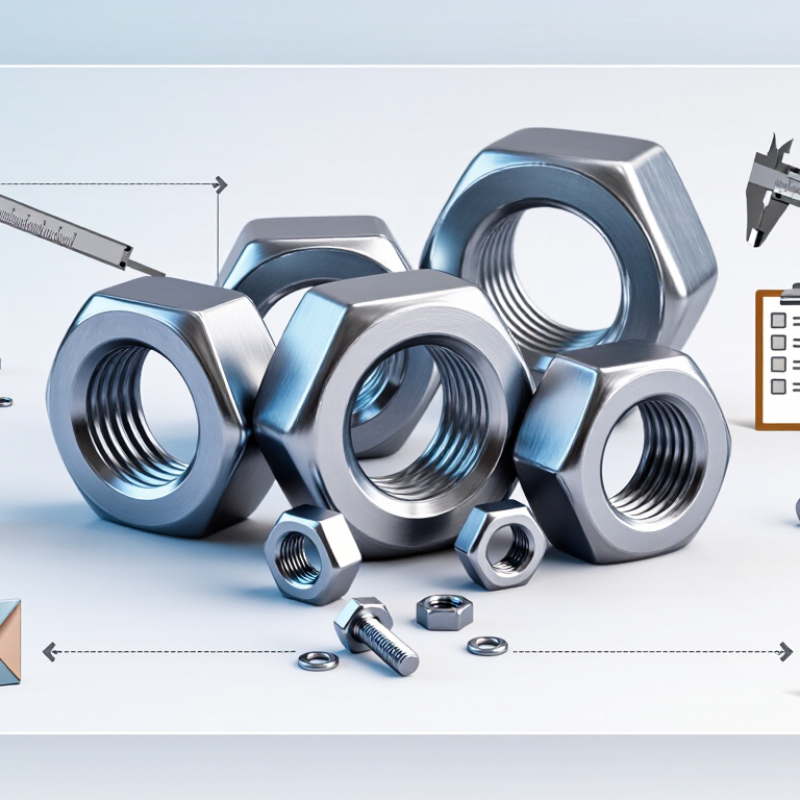
10 Hexagon Nuts Buying Tips for Global Buyers?

Define Hexagon Nut Types, Sizes, and Application Requirements

10 Hexagon Nuts Buying Tips for Global Buyers

Define the hexagon nut before comparing prices. A standard hex nut fits general bolted joints, while a lock nut resists loosening under vibration. Flange nuts spread pressure across wider surfaces. Thin nuts suit limited thread space, but they provide less thread engagement. Match the nut type with the bolt, washer, and joint movement. Mixing metric and inch threads can cause costly delays.

Record the nominal diameter, thread pitch, width across flats, and nut height. For example, an M10 × 1.5 nut differs from an M10 × 1.25 nut. Check whether the drawing requires coarse or fine threads. Confirm the strength grade with the bolt grade and expected load. A high-strength bolt paired with a weak nut creates an unsafe joint. I also check the thread fit by hand before installation. This simple step catches rough or damaged threads. It is easy to overlook.

Application conditions determine material and finish. Carbon steel works for many indoor assemblies, while stainless steel suits humid or corrosive areas. Plated surfaces may improve corrosion resistance, but coating thickness can affect thread fit. Ask for dimensional inspection records, material certificates, and sample photographs. Specify packaging that separates sizes and prevents moisture during shipping. In my experience, labels sometimes fail despite clear purchase documents. I now verify markings, quantities, and random samples before release. Even then, inspection plans should be reviewed when the application changes.

Check Material Grades, Coatings, Standards, and Corrosion Resistance

For a hexagon nut, start with the material grade and the load it must carry. Match it to the bolt’s grade and consider operating temperature, vibration, and repeated assembly. A nut used on a vibrating outdoor frame may need different properties from one inside dry equipment. Stainless steel can resist corrosion, but it is not automatically the strongest or best choice. Check product markings and request material certificates when traceability matters. Small details matter.

Standards define dimensions, thread tolerances, and mechanical requirements, so confirm the required standard before comparing quotations. A coating can change thread fit, especially if its thickness is not accounted for. Zinc-based coatings may suit some environments, while specialized coatings may be needed for harsher exposure. Check coating specifications and confirm that the nut and bolt are compatible. In purchasing reviews, this mismatch is easy to overlook. It still catches teams out.

Corrosion resistance depends on the real conditions: salt spray, moisture, chemicals, and contact with dissimilar metals. Ask for test information, but do not treat a salt-spray result as a precise prediction of service life. Not always. Inspect sample nuts for even coverage, clean threads, and visible damage. If the application is critical, have a qualified engineer review the material, coating, and standard together; a coating that performs well in one setting may disappoint in another.

10 Hexagon Nuts Buying Tips for Global Buyers: Compare Material Grades

This chart compares the nominal minimum proof stress associated with ISO 898-2 metric nut property classes. Higher-strength classes can support higher loads, but buyers should also verify thread size, hardness, operating temperature, and the matching bolt grade. Coating choice should be specified separately: ISO 4042 covers electroplated coatings, ISO 10684 covers hot-dip galvanized fasteners, and ISO 3506-2 covers corrosion-resistant stainless-steel nuts. Strength grade alone does not determine corrosion resistance.

Evaluate Thread Accuracy, Dimensions, Strength, and Quality Certifications

Hexagon nuts can appear identical in a catalog, yet small thread or size differences can stop assembly on the shop floor. Ask suppliers for the nominal diameter, pitch, tolerance class, and applicable dimensional standard. Check samples with a calibrated thread plug gauge; a nut that spins loosely or binds deserves investigation. Measure across flats and nut height with calipers, not by eye. Check the bore after plating, since coatings can reduce usable clearance. Small details matter.

Strength needs equal care. Confirm the property class matches the bolt and joint design, then review test reports for proof load or hardness where specified. Request material and inspection records tied to the production lot, rather than a generic certificate with no traceable batch number. Check that certificates identify the standard, test method, date, and issuing laboratory. Paperwork helps, but it cannot replace incoming inspection. Stay alert. Keep retained samples and record gauge results, coating condition, and packaging damage. A sample approval may not reveal changes between lots, so recheck periodically, especially after a supplier changes its process or finish.

Compare Global Suppliers, Pricing, Minimum Orders, and Production Capacity

10 Hexagon Nuts Buying Tips for Global Buyers

When comparing global suppliers, send every seller the same drawing and requirements: thread size, material, finish, strength class, and packaging. A quote for zinc-plated nuts is not comparable with one for stainless steel. Ask whether prices include inspection, export packing, and delivery to your destination. A low unit price can hide extra costs. Check the full landed cost.

Tip: Compare minimum order quantities alongside price breaks. A supplier may offer a lower price at 50,000 pieces, but your first order may only need 8,000. Request pricing for your actual quantity and one larger tier. Confirm whether mixed sizes count toward the minimum. Small details matter.

Production capacity needs specific questions. Ask for typical lead time, monthly output for your nut size, and current order backlog. Capacity claims alone are not proof of availability. Request a recent sample and verify dimensions, thread fit, and finish before approving bulk production. One easy mistake is judging a supplier by a polished sample while overlooking how routine batches are checked. Ask for inspection records and a clear process for reporting defects.

Confirm Samples, Packaging, Shipping Terms, Customs, and After-Sales Support

For global buyers, a hexagon nut is small, but the purchasing risk is not. Confirm a physical sample before approving production. Check thread fit with a calibrated gauge, across-flats dimensions, material grade, plating, and hardness. Request inspection records and batch photographs. I once trusted a signed drawing alone. That was not enough.

Packaging needs equal attention. Specify inner bags, carton weight, moisture protection, pallet limits, and readable labels. A 25-kilogram carton can be manageable in a warehouse but unsafe for manual handling. The International Safe Transit Association recommends testing packaging against the actual distribution environment. Ask for a packing sample before shipment. Small details fail first.

Choose shipping terms under Incoterms 2020, and define who pays freight, insurance, unloading, and import clearance. UNCTAD’s Review of Maritime Transport reports that over 80% of global merchandise trade by volume moves by sea, so port delays deserve a written plan. The WTO’s World Trade Statistical Review shows that merchandise trade involves extensive cross-border movement, making customs accuracy essential. Confirm HS classification, country-of-origin documents, commercial invoices, and applicable duties with a customs broker. HS 7318.16 commonly covers iron or steel nuts, but local tariff treatment may differ. Request a corrective-action timeline, replacement policy, and response deadline after delivery. Silence is costly.

10 Hexagon Nuts Buying Tips for Global Buyers: Confirm Samples, Packaging, Shipping Terms, Customs, and After-Sales Support
No. Buying checkpoint What to verify Useful evidence or documents Buyer action
1 Define the nut specification Confirm nominal thread diameter, thread pitch, nut style, dimensions, material, property class, and applicable standard. Hex nuts are commonly specified to standards such as ISO 4032; confirm that the chosen standard matches the application. Approved drawing or specification sheet; standard and revision; dimensional requirements. Put all requirements in the purchase order rather than relying on a general description such as “standard hex nut.”
2 Check material and strength Match the material and mechanical property class to the joint design, service temperature, and environment. For metric nuts, verify the requested property class against the applicable nut standard, such as ISO 898-2. Material and mechanical test reports; product marking requirements, where applicable. Have a qualified engineer confirm suitability for safety-critical or highly loaded connections.
3 Specify thread fit and gauge checks Confirm thread system, pitch, tolerance class, and whether the thread is coarse or fine. Ensure the nut and mating bolt use compatible thread specifications. Thread specification; inspection records using appropriate calibrated gauges. Request the thread details in writing and check them against the mating fastener before approving production.
4 Review finish and corrosion requirements Specify the coating or finish, required corrosion performance, and any dimensional or assembly limits. Electroplating high-strength fasteners can introduce hydrogen-embrittlement concerns; agree on applicable process controls and requirements with the supplier. Finish specification; coating thickness or corrosion-test requirements, if specified; process documentation where required. Do not treat “zinc plated” or “corrosion resistant” as a complete specification; state the required finish and acceptance criteria.
5 Approve a representative sample Check that the sample matches the ordered dimensions, thread, material, strength class, finish, and marking requirements. Confirm whether the sample is production-representative. Approved sample record; inspection results; written confirmation of any deviations. Approve the sample in writing and state that approval does not replace agreed production inspection or contractual requirements.
6 Agree on quality control and traceability Set inspection points, acceptance criteria, sampling approach, and how nonconforming product will be handled. Agree on lot identification and traceability appropriate to the application. Inspection and test plan; lot records; certificates or reports required by the purchase order. Define documentation and inspection requirements before production; avoid assuming that a certificate is included unless it is agreed.
7 Set packaging and labeling requirements Agree on quantity per bag or box, inner and outer packaging, protection from moisture and damage, carton limits, and any palletization requirements. Packaging specification; approved label fields such as part description, size, quantity, lot number, and country of origin where required. Request photos or a packaging sample before shipment if packaging affects warehouse handling, inventory control, or product condition.
8 Clarify shipping terms and schedule Identify the delivery term, the named place or port, the agreed Incoterms edition, shipment method, and who arranges freight, insurance, and export or import formalities under that term. Purchase order; freight quotation; commercial invoice and packing list; transport document as applicable. Use a precise term such as “FCA [named place], Incoterms 2020” and confirm the delivery window, transit assumptions, and responsibility for charges.
9 Prepare customs and import details Check the product classification, duty rate, taxes, and import requirements with the relevant customs authority or customs broker. Classification and origin documentation requirements can differ by destination and product details. Accurate commercial invoice; packing list; transport document; origin documents or permits if required by the destination. Confirm the likely HS classification with a qualified customs professional before shipping; do not rely on a supplier’s code without destination-country verification.
10 Agree on claims and after-sales support Define how shortages, damage, dimensional issues, or other nonconformities will be reported and investigated, including notice periods and corrective-action expectations. Written claims procedure; order and lot records; inspection evidence; agreed corrective-action process. Identify a contact and response process before placing the order, and retain samples, labels, and shipment records for any follow-up.

FAQS

Which thread details should be confirmed before ordering hexagon nuts?

Confirm nominal diameter, pitch, tolerance class, and the required dimensional standard.

How can thread fit be checked accurately?

Use a calibrated thread plug gauge on production samples.

Which dimensions require physical measurement?

Measure across flats and nut height with calibrated calipers.

How should nut strength be verified?

Match the property class with the bolt and joint design.

What certification records should suppliers provide?

Request material and inspection records linked to the production batch.

Why are retained samples and repeated inspections useful?

Keep samples and record gauge results, coating condition, and packaging damage.

What should packaging requirements include?

Specify inner bags, carton weight, moisture protection, pallet limits, and readable labels.

Which shipping and customs details need written confirmation?

Define responsibility for freight, insurance, unloading, and import clearance.

What after-sales support should be agreed before delivery?

Set a corrective-action timeline, replacement policy, and response deadline.

Conclusion

Choosing the right Hexagon Nuts starts with understanding the required nut type, size, thread, and intended application. Buyers should match material grades and protective coatings to the operating environment, especially when moisture or corrosion may be a concern. Confirm that products meet relevant industry standards, and review thread accuracy, dimensions, strength ratings, and quality certifications to help ensure consistent fit and performance.

Before placing an order, compare suppliers on pricing, minimum order quantities, production capacity, and communication. Request samples when practical to evaluate quality, and clarify packaging, shipping terms, delivery schedules, customs documentation, and after-sales support in advance. A careful review of these factors helps global buyers reduce sourcing risks, avoid specification mismatches, and select Hexagon Nuts suited to both technical requirements and purchasing needs.


Isabella

Isabella

Isabella is a dedicated marketing professional with a sharp focus on driving brand growth and engagement through strategic content creation. With an extensive background in digital marketing, she combines her passion for storytelling with her keen understanding of industry trends to deliver......