Choosing the right Hexagon Bolts can determine whether a project remains secure, serviceable, and reliable over time. A bolt may look suitable on the shelf, yet fail under vibration, moisture, heat, or repeated loading. The correct choice depends on more than diameter. Thread type, length, material, strength grade, head size, and surface finish must match the application.
In practical assembly work, I check the joint design before selecting hardware. A bolt joining steel brackets may require a higher strength grade than one used on a light indoor frame. Stainless steel can resist corrosion, but it may not provide the same tensile strength as hardened alloy steel. Environmental details matter too. Salt air, chemical exposure, temperature changes, and trapped water can alter performance.
Small details matter.
Reliable selection also requires verified product information. Check the manufacturer’s specifications, applicable industry standards, thread tolerance, and recommended tightening torque. Never assume that a longer bolt is automatically safer; excessive thread engagement can interfere with components or create installation problems. Washers, nuts, locking methods, and joint surfaces should be evaluated as one system.
No selection method is flawless. Real projects often reveal missing information, such as uncertain loads or unexpected vibration. That is why engineers should review calculations, inspect samples, and confirm compatibility before full installation. A careful decision may take longer, but it reduces rework and supports dependable performance. This guide explains the key factors clearly, while recognizing that professional judgment remains essential for critical applications.
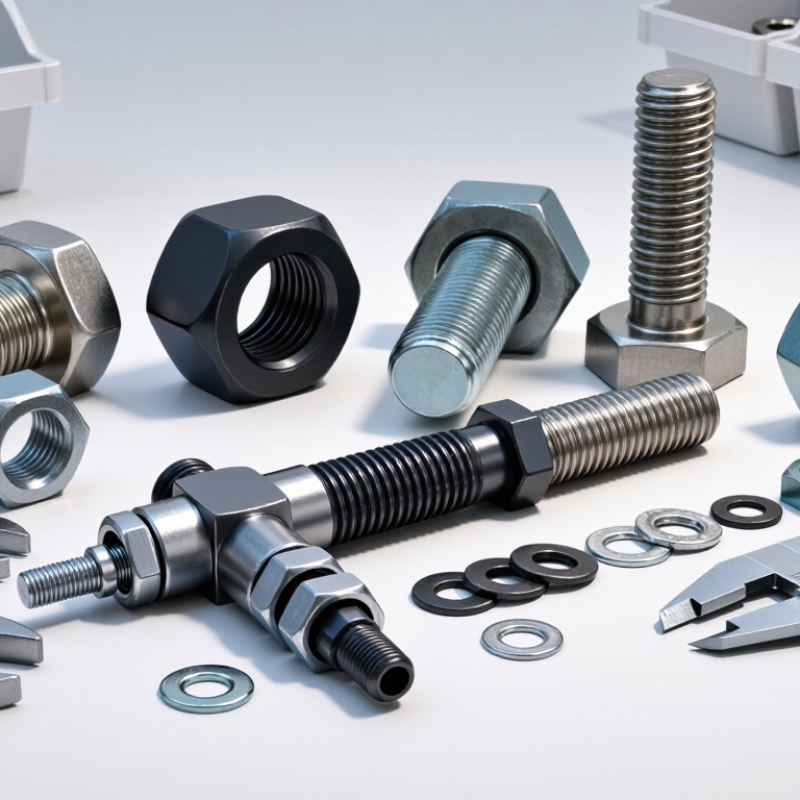
A hexagon bolt has a six-sided head, threaded shaft, and bearing face beneath the head. The head accepts a wrench, while the threads create clamping force with a compatible nut or tapped hole. Some bolts have a fully threaded shank. Others leave a smooth shoulder for better shear resistance and alignment. Bolt length is measured from beneath the head, not from the top.
Material and strength class matter. Carbon steel suits many indoor frames, brackets, and machinery repairs. Stainless steel helps resist moisture, although it may not provide the highest strength in every design. Coarse threads install quickly and tolerate dirt. Fine threads allow more precise adjustment but can be easier to damage. Match the bolt with the correct nut, washer, diameter, pitch, and strength rating. A loose match is not a small problem.
Measure twice. I once selected a bolt by length alone and overlooked the thread pitch. It fit briefly, then damaged the mating hole. That shortcut can fail. Check the joint thickness, clearance around the head, expected load, vibration, and exposure to water or chemicals. Washers can spread pressure across softer surfaces. For outdoor structures, corrosion protection deserves attention before installation, not after rust appears. Tighten according to the specified torque when safety or structural performance matters. Hand-tight may feel secure, but it can hide uneven clamping.
Choosing a hexagon bolt starts with the load, not the toolbox. Match diameter and length to the joint design. A bolt that is too short may leave insufficient thread engagement. One that is too long can interfere with moving parts. Use a caliper and thread gauge when measurements are uncertain. Guessing is expensive.
Thread selection matters. The bolt and nut must share the same diameter and pitch. Coarse threads tolerate dirt and minor damage better. Fine threads offer smaller pitch changes and improved adjustment.
For strength, ISO 898-1:2013 identifies property class 8.8 bolts with a minimum tensile strength of 800 MPa. Class 10.9 reaches at least 1,040 MPa. Higher strength is not automatically safer. It can increase brittleness and damage softer materials.
Preload deserves attention. NASA-RP-1228, Fastener Design Manual, discusses tightening near 75% of proof load for many engineered joints. Actual values depend on friction, lubrication, and joint stiffness.
A torque wrench helps, but torque alone can mislead. Friction may consume much of the applied torque. I have seen apparently tight bolts loosen after vibration because the washer, thread condition, or clamp length was overlooked. Check the drawing, confirm the mating nut, and verify the bolt grade before installation. A small test assembly can reveal problems that calculations miss.
Choose the bolt material from the joint’s load, temperature, and exposure conditions. Carbon steel suits many indoor assemblies and offers predictable strength under ISO 898-1. High-strength grades need careful handling. Excessive hardness can increase hydrogen-embrittlement risk after electroplating. Stainless steel resists moisture well, but it may gall during tightening and lose strength at elevated temperatures.
Corrosion changes everything. The NACE IMPACT study estimated global corrosion costs at 3.4% of worldwide gross domestic product, or about 2.5 trillion dollars annually. That figure supports spending more time on the finish, not simply choosing the cheapest bolt. Zinc electroplating works for moderate indoor exposure. Hot-dip galvanizing provides a thicker zinc layer for outdoor steelwork and follows ISO 10684. Stainless fasteners can suit coastal or wet environments, although dissimilar-metal contact may cause galvanic corrosion. Use compatible washers and inspect damaged coatings.
Salt-spray results are useful for comparing finishes, but they do not predict exact field life. ASTM B117 itself warns against treating chamber hours as direct service-life data. Real conditions include rain, dust, crevices, and poor drainage. I have seen a bright plated bolt fail faster than a dull galvanized one because the joint trapped water. That detail is easy to miss. Check the coating specification, torque method, and site exposure together. A perfect material choice can still fail through an overlooked installation detail.
How to Choose the Right Hexagon Bolts for Your Project?
Check Fit, Load Capacity, and Environmental Conditions
Start with fit, not appearance. Match the bolt diameter, thread pitch, length, and clearance to the mating parts. A coarse thread may suit damaged or dirty threads, while a fine thread can provide better adjustment and preload. Check the relevant dimensions in ISO 4014 or ISO 4017, depending on whether the bolt has a partial or full thread. Keep enough thread engagement, but avoid a long unthreaded section that bottoms out before clamping the joint. It happens more often than expected.
Load capacity requires more than reading tensile strength. ISO 898-1 classifies carbon and alloy steel bolts by tensile strength, proof load, and yield behavior. For example, property class 8.8 bolts have a nominal tensile strength of 800 MPa and a nominal yield ratio of 0.8. Engineers should also check shear, fatigue, joint separation, and tightening accuracy. The NASA Fastener Design Manual treats preload and joint stiffness as critical design factors, not optional details. Torque alone can mislead because friction changes the achieved preload.
Environment can quietly defeat a correct design. Moisture, salt, chemicals, and temperature may cause corrosion, galling, or strength loss. The Federal Highway Administration estimated annual U.S. corrosion costs at 276 billion dollars in its 2002 report. Select compatible materials and protective finishes, then verify performance in the real exposure. Stainless steel is not automatically safe; trapped salt can still create localized corrosion. Review the choice after installation. Maybe the assumed load was too optimistic.
| Nominal Size (Metric Coarse) |
Thread Pitch (mm) |
Across Flats (mm) |
Tensile Stress Area (mm²) |
Approx. Proof Load Property Class 8.8 (kN) |
Illustrative Working Load at Safety Factor 3 (kN) |
Fit and Application Guidance | Environmental Considerations |
|---|---|---|---|---|---|---|---|
| M6 | 1.00 | 10 | 20.1 | 11.7 | 3.9 | Suitable for light brackets, guards, covers, and small equipment assemblies. Confirm clearance-hole diameter and available wrench access. | Use zinc-coated steel for ordinary indoor service. For persistent moisture or outdoor exposure, select a corrosion-resistant material or coating compatible with the joint. |
| M8 | 1.25 | 13 | 36.6 | 21.2 | 7.1 | A common general-purpose size for machine frames and medium-duty assemblies. Match the bolt diameter to the joint-hole size and plate thickness. | Avoid mixing dissimilar metals in wet conditions unless galvanic corrosion has been assessed. Seal water-entry paths where practical. |
| M10 | 1.50 | 16 | 58.0 | 33.6 | 11.2 | Appropriate for medium-duty structural and equipment joints when the connected material can support the required clamping force. | For outdoor or humid service, verify coating thickness, thread compatibility, and the effect of corrosion on the joint preload. |
| M12 | 1.75 | 18 | 84.3 | 48.9 | 16.3 | Useful for heavier machinery, frames, and structural connections. Check washer diameter, edge distance, joint stiffness, and required tightening torque. | For salt spray, chemicals, or continuous condensation, use a documented corrosion-resistant system and inspect for thread seizure and section loss. |
| M16 | 2.00 | 24 | 157 | 91.1 | 30.4 | For high-load joints in heavy equipment and structural assemblies. Confirm that the connected plates, threads, washers, and tools are rated for the load. | In severe environments, specify the complete fastening system rather than the bolt alone, including nut, washer, coating, and inspection requirements. |
| M20 | 2.50 | 30 | 245 | 142.1 | 47.4 | Designed for substantial structural and machinery joints. Engineering verification is recommended for fatigue, vibration, shear, prying, and combined loading. | Use a corrosion-control plan for marine, chemical, or high-temperature service. Check whether the selected coating changes installation torque or thread engagement. |
Choosing the right hexagon bolts starts with the joint, not the bolt bin. Identify the connected materials, load direction, vibration, temperature, and available clearance. A bolt used in tension needs different consideration from one exposed to shear. Check diameter, thread pitch, length, strength class, and corrosion resistance together. One mismatched detail can weaken the entire assembly.
I once saw a bolt selected by length alone. It reached the nut, but excessive thread extended through the joint. This reduced engagement and complicated inspection. Measure the combined material thickness, washer thickness, and required thread engagement. Avoid mixing thread standards or forcing a coarse thread into a fine-thread nut. It feels tight. It is not correct. Confirm markings against reliable technical documentation, rather than trusting appearance.
Installation mistakes are equally common. Clean the contact surfaces and remove damaged threads before assembly. Use the specified tightening torque and a calibrated wrench when the joint is safety-critical. Do not guess torque from hand resistance. Over-tightening may stretch the bolt or crush softer material. Under-tightening allows movement, loosening, and fretting. A washer can distribute pressure, but it cannot repair poor joint design. After installation, inspect alignment, exposed threads, seating, and signs of corrosion. Recheck the joint after initial operation if vibration or settling is expected. My own shortcut was skipping that follow-up inspection. It saved minutes, not risk.
It has a six-sided head, threaded shaft, and bearing face beneath the head. A wrench grips the head. Threads create clamping force with a nut or tapped hole.
Measure from beneath the head to the threaded tip. Do not measure from the top of the head. Include the joint, washer, and required thread engagement.
Consider load, temperature, moisture, and chemical exposure. Carbon steel suits many indoor frames and machinery repairs. Stainless steel handles moisture well, but it may lose strength at high temperatures.
Coarse threads install quickly and tolerate dirt better. Fine threads provide more precise adjustment. However, fine threads can damage more easily during installation.
Match diameter, thread pitch, strength rating, and thread standard. The washer should also suit the joint surface. A bolt may feel tight and still be incorrect.
Use a washer to spread pressure across softer surfaces. It can protect painted metal or thin sheet material. A washer cannot fix poor joint design.
Select a finish suitable for rain, dust, and trapped moisture. Thicker protective coatings often suit outdoor steelwork. Inspect scratches, exposed metal, and water-holding gaps after installation.
Clean contact surfaces and remove damaged threads first. Do not force different thread types together. Avoid guessing torque by hand resistance.
Correct torque creates more even clamping force. Over-tightening may stretch the bolt or crush softer material. Under-tightening allows movement and loosening.
Check alignment, head seating, exposed threads, and coating damage. Look for movement, rust, or fretting near the joint. Recheck after early operation if vibration or settling is expected. I once skipped that step. It saved minutes, not risk.
Choosing the right Hexagon Bolts starts with understanding their basic design, including the hexagonal head, threaded shank, and available bolt types for different fastening tasks. First, match the bolt diameter, length, thread style, and strength grade to the materials being joined and the expected load. A properly selected bolt should provide secure clamping without being too short, too long, or excessively stressed.
Material and protective finish are also important factors. Choose options that can withstand moisture, chemicals, heat, or outdoor exposure when necessary. Before installation, check thread compatibility, hole alignment, clearance, and the required tightening force. Consider vibration, weight, and repeated loading to confirm the connection can perform safely over time. Avoid common mistakes such as mixing incompatible threads, relying only on appearance to judge strength, overtightening, using damaged components, or ignoring corrosion risks. Careful selection and correct installation will improve reliability, safety, and service life.

San Biao