In the competitive landscape of fasteners, "Hot Dip Galvanized Nuts" have gained significant attention among global buyers. John Anderson, a leading expert in the fastener industry, once stated, "The durability of Hot Dip Galvanized Nuts is unmatched, making them essential for various applications." His insights highlight the importance of these nuts in construction and manufacturing.
Hot Dip Galvanized Nuts undergo a rigorous process that ensures longevity and resistance to corrosion. This makes them a preferred choice for outdoor projects and high-stress environments. However, navigating the wide selection can be challenging for buyers. Factors such as coating thickness, size, and grade must be considered.
The need for reliable sourcing of Hot Dip Galvanized Nuts is paramount. Many buyers overlook the potential variations in quality between suppliers. Understanding these differences can lead to better purchasing decisions. As the market evolves, staying informed about product developments is crucial for success.
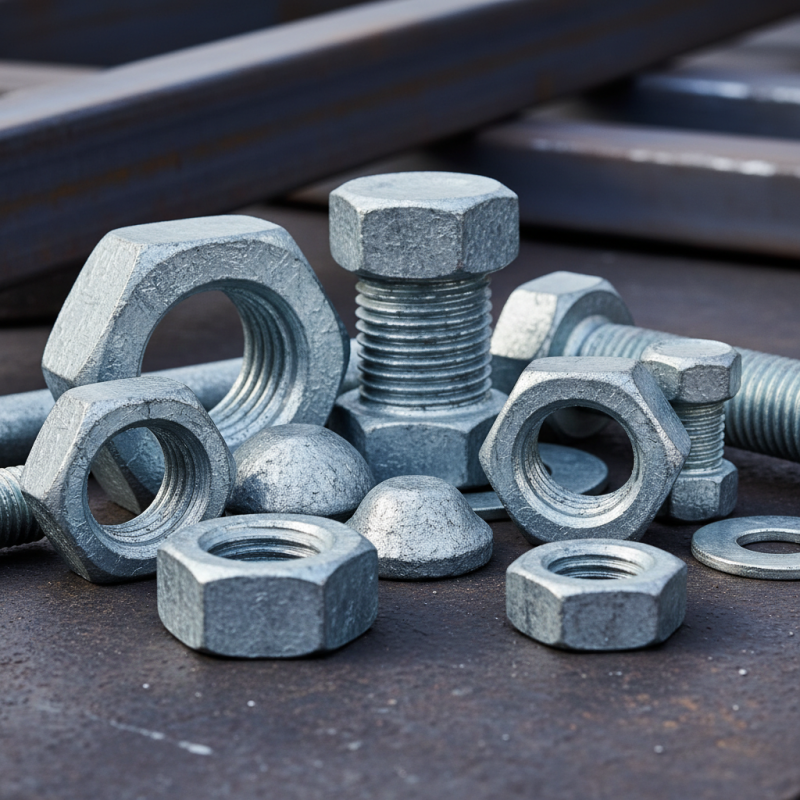
Overview of Hot Dip Galvanized Nuts and Their Benefits
Hot dip galvanized nuts are essential components in various industries, known for their corrosion resistance and durability. The hot dip galvanizing process involves coating steel nuts with zinc, providing a strong barrier against environmental factors. According to industry reports, the usage of galvanized nuts can extend their lifespan by more than 70% compared to non-galvanized alternatives.
The advantages of hot dip galvanized nuts are significant. They excel in harsh conditions, such as marine environments, where corrosion can be a major issue. This protection reduces maintenance costs and enhances operational efficiency. A study reveals that structures employing galvanized nuts show decreased failure rates, underscoring their reliability in critical applications.
**Tip:** Always consider environmental conditions when selecting fasteners. A wrong choice can lead to unexpected failures.
Despite their benefits, there can be some drawbacks. The galvanizing process may lead to dimensional variations, which could affect fit. Additionally, when mechanical properties are crucial, consulting technical data is essential, as some galvanized nuts may experience reduced strength.
**Tip:** Prioritize quality checks to ensure all components meet stringent standards. Little oversights can lead to serious consequences.
Key Factors to Consider When Selecting Hot Dip Galvanized Nuts
When selecting hot dip galvanized nuts, several key factors come into play.
The thickness of the zinc coating is crucial. A thicker coating typically offers enhanced corrosion resistance, extending the lifespan of your application. Check the coating standards. These standards guarantee that the nuts will perform well in various environmental conditions. Consider the nut's material and grade as well, as these factors influence strength and durability.
The dimensions of the nuts must also be precise. Incorrect sizes can lead to installation difficulties, affecting the overall integrity of the structure. Always look for a reliable supplier that provides detailed specifications. This transparency can significantly impact your project outcomes. Additionally, look into the nuts' compatibility with other fasteners. Mismatched materials can lead to galvanic corrosion, which compromises the entire assembly.
It’s important to note that not all galvanized nuts will perform the same under identical conditions. Some may rust prematurely, prompting re-evaluation of suppliers and their processes. Quality control is essential in manufacturing. Buyers should seek warranties or guarantees that give assurance of the product’s longevity. The choice of a trusted manufacturer can save costs in the long run.
Top 10 Hot Dip Galvanized Nuts: Specifications and Applications
Hot dip galvanized nuts are essential fasteners with various applications. They provide protection against corrosion due to their zinc coating. This makes them ideal for outdoor and industrial uses. Construction projects often require these nuts to secure structures in harsh environments. Their durability extends the lifespan of assemblies in challenging conditions.
Several specifications exist for hot dip galvanized nuts. Common sizes range from M4 to M30. They are used with corresponding bolts for proper fitting. Standard grades like ASTM A194 ensure quality and performance. Additionally, surface finish can impact the ease of installation. Though they are resistant to rust, improper storage can lead to corrosion.
Choosing the right hot dip galvanized nuts can be challenging. Factors like load capacity and environmental conditions must be considered. Some buyers may overlook these details. Researching material properties is crucial. Not all nuts meet stringent industrial standards. Examining certifications helps ensure reliability and safety. These considerations can influence project outcomes significantly.
Comparison of Leading Brands in Hot Dip Galvanized Nuts
When considering hot dip galvanized nuts, various brands offer unique features. Many manufacturers integrate innovative technologies to enhance corrosion resistance and durability. The application of zinc coating provides significant protection against rust, extending the lifespan of these fasteners in extreme conditions. Buyers should assess factors like coating thickness and nut dimensions.
Moreover, while price is a critical factor, it should not be the only criterion. Some brands may offer lower prices but compromise on quality. It’s essential to evaluate user reviews and performance benchmarks. Different industries may have different requirements. Some nuts are better suited for marine applications, while others excel in construction. A detailed review of specifications can guide buyers toward optimal choices.
Many buyers overlook how standards affect performance. Compliance with recognized regulations ensures reliability and safety. However, not all products meet these criteria. Discrepancies can arise in manufacturing processes, calling for thorough research. Each choice demands careful consideration, reflecting a balance between cost, quality, and specific application needs.
Top 10 Hot Dip Galvanized Nuts - Performance Comparison
Global Market Trends and Future Outlook for Hot Dip Galvanized Nuts
The global market for hot dip galvanized nuts is evolving rapidly. This trend reflects an increasing demand for durable and corrosion-resistant fasteners. Industries such as construction, automotive, and manufacturing heavily rely on these nuts. The need for reliable components grows alongside infrastructure developments worldwide. As economies recover, the focus on sustainability boosts the use of hot dip galvanized products.
Market dynamics indicate a shift toward higher quality standards. Buyers are increasingly looking for certification that ensures product reliability. Many manufacturers are investing in advanced coating technologies. This supports increased longevity and performance. However, not all manufacturers meet these emerging standards, leading to quality variations in the market.
There's an observable rise in competition among suppliers as well. Areas with substantial industrial activity see higher consumption rates. This can create regional shortages, impacting pricing and availability. Buyers now face the challenge of sourcing high-quality products amidst fluctuating market conditions. They must evaluate suppliers diligently, considering factors like compliance and reliability. This emphasizes the importance of informed procurement strategies in a dynamic marketplace.
Top 10 Hot Dip Galvanized Nuts for Global Buyers
| Rank |
Type |
Size (mm) |
Standard |
Country of Origin |
Market Demand (Annual) |
Future Outlook |
| 1 |
Hex Nuts |
8-20 |
ISO 4032 |
China |
5 million pcs |
Stable growth |
| 2 |
Coupling Nuts |
10-30 |
ASTM A563 |
India |
3 million pcs |
Increasing demand |
| 3 |
Flange Nuts |
12-24 |
DIN 6923 |
Germany |
2 million pcs |
Growth potential |
| 4 |
Lock Nuts |
8-16 |
ISO 7042 |
USA |
4 million pcs |
Steady demand |
| 5 |
Wing Nuts |
6-18 |
DIN 315 |
Turkey |
1.5 million pcs |
Niche growth |
| 6 |
Square Nuts |
10-22 |
ISO 4035 |
Japan |
2.5 million pcs |
Stable market |
| 7 |
Self-Locking Nuts |
8-14 |
ASTM A563 |
South Korea |
3 million pcs |
Rising demand |
| 8 |
T- Nuts |
10-30 |
ISO 7363 |
Italy |
2 million pcs |
Increasing application |
| 9 |
Parker Nuts |
8-22 |
DIN 934 |
Brazil |
1 million pcs |
Stable niche |
| 10 |
Cap Nuts |
10-16 |
ANSI/ASME B18.2 |
Russia |
1.5 million pcs |
Growing usage |
FAQS
: Key factors include zinc coating thickness, material grade, and dimensions for precise installation.
Thicker zinc coatings offer better corrosion resistance, enhancing the longevity of your application.
Look for reliable suppliers with detailed specifications and quality control measures in place.
Incorrect sizes can lead to installation issues, affecting the integrity of the overall structure.
Yes, mismatched fasteners can lead to galvanic corrosion, jeopardizing the entire assembly’s performance.
No, performance can vary significantly. Some nuts may rust prematurely, requiring reassessment of manufacturers.
Focus on sizes between M4 and M30, as well as compliance with standard grades like ASTM A194.
Improper storage can lead to corrosion, despite their rust resistance.
User reviews can help gauge quality and performance, aiding in your decision-making process.
No, prioritizing quality over price is crucial. Low-cost options may compromise performance.
Conclusion
Hot Dip Galvanized Nuts are essential components in various construction and manufacturing applications, providing enhanced corrosion resistance and durability. This article offers an overview of the benefits associated with Hot Dip Galvanized Nuts, including their prolonged lifespan in harsh environments and improved load-bearing capacity. It highlights important factors to consider when selecting these nuts, such as material specifications, compatibility with different environments, and application requirements.
Furthermore, the article outlines the top ten Hot Dip Galvanized Nuts, detailing their specifications and applications across various industries. A comparison of leading brands offers insights into their performance and reliability. Finally, it discusses current global market trends and provides an outlook for the future of Hot Dip Galvanized Nuts, emphasizing their growing significance in the global marketplace as demand for durable and high-performance fastening solutions increases.

 San Biao