Product Introduction
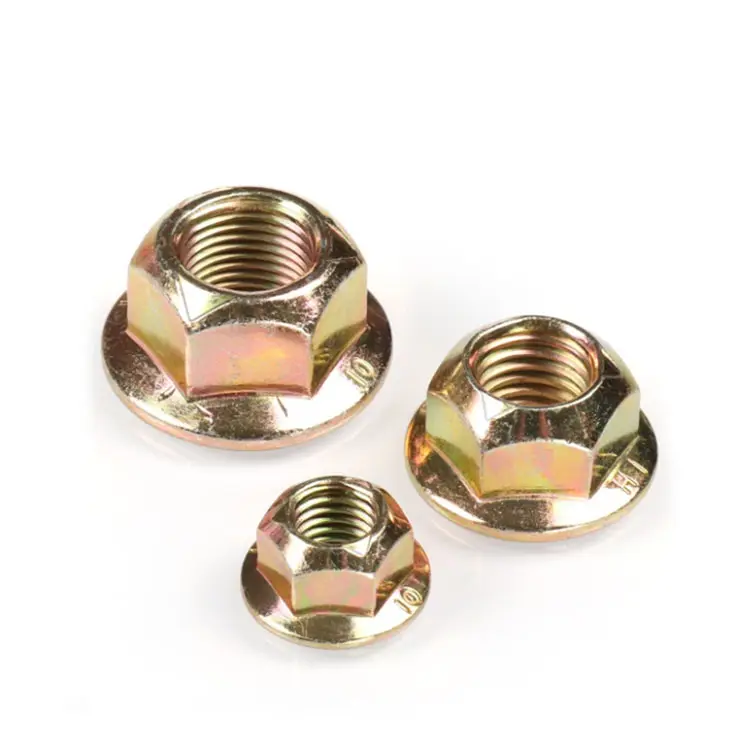
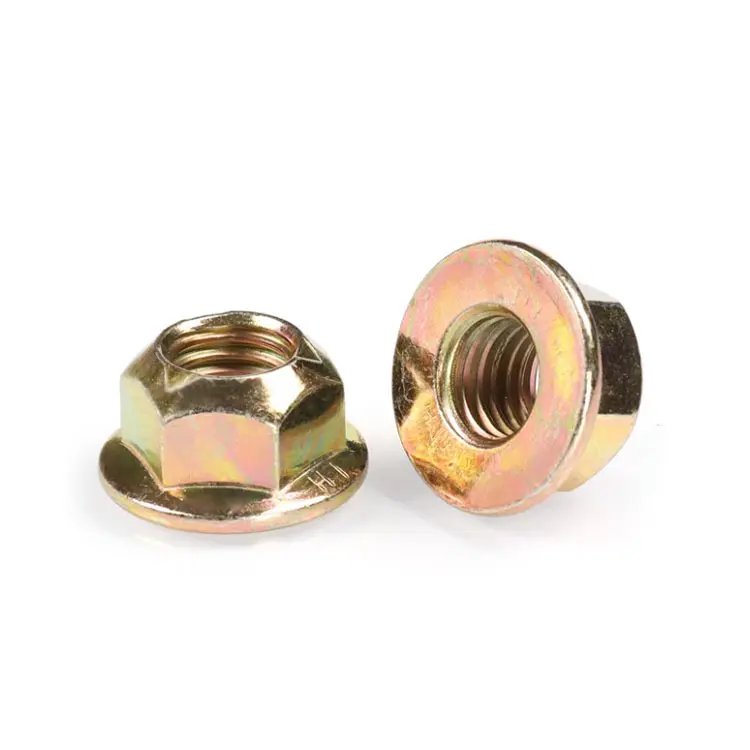
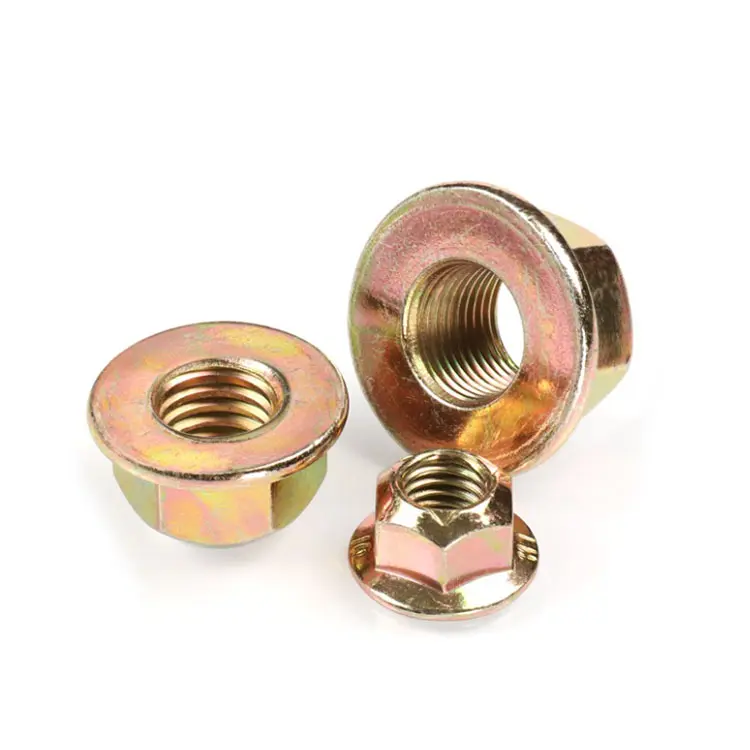
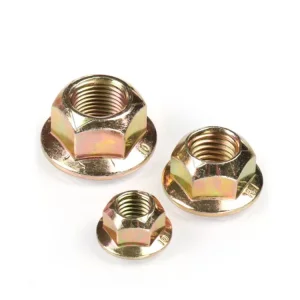
Flange nuts are mostly hexagonal in shape and are mainly made of hardened steel, and the surface is usually galvanized to enhance their corrosion resistance. In applications, the flange nut usually rotates with the flange and its flange may be serrate, providing an excellent locking feature that prevents the nut from rotating in the loose direction.
⚙️
Robust Stability
Excellent anti-loosening and increased contact surface characteristics make the flange nut excellent in ensuring the stability and safety of the equipment.
🏗️
Wide Application
From high-tech fields such as aviation and aerospace to architecture, chemical industry, water treatment, and food processing.
🛡️
Durable Design
Integrated gasket and nut with anti-slip tooth patterns below, capable of withstanding high pressure and high temperature.
Flange nut is also known as gasket nut, tooth nut, hexagonal flange face nut, flange nut, etc., its size and specifications are the same as hexagonal nut, but its gasket and nut are integrated, and there is an anti-slip tooth pattern below, which also increases the contact between the surface area of the nut and the workpiece. Compared with the combination of ordinary nut and washer, the anti-loosening performance is stronger.
The application is mainly used to connect two pipelines or between the pipeline and the equipment, because it has good sealing performance, it is mostly used in the pipeline connection or the workpiece that needs to increase the contact surface of the nut to ensure the firmness and tightness of the connection. It is able to withstand the action of high pressure and high temperature, preventing leakage and loosening.
Frequently Asked Questions
What materials are flange nuts typically made of?
Flange nuts are mainly made of hardened steel and are usually galvanized on the surface to enhance their corrosion resistance.
What is the advantage of the serrated flange on the nut?
The serrated flange provides an excellent locking feature that prevents the nut from rotating in the loose direction, ensuring a secure connection.
In which industries are flange nuts commonly used?
They are widely used in aviation, aerospace, architecture, chemical industry, water treatment, and food processing for securing various components.
How does a flange nut differ from an ordinary nut and washer?
A flange nut integrates the gasket and nut into one piece. It features an anti-slip tooth pattern that increases the contact surface area, offering stronger anti-loosening performance than a separate nut and washer.
Can flange nuts withstand extreme conditions?
Yes, flange nuts are designed to withstand high pressure and high temperature, making them ideal for preventing leakage and loosening in demanding environments.
What are some common names for flange nuts?
They are also known as gasket nuts, tooth nuts, hexagonal flange face nuts, and flange face nuts.
 San Biao